Jerry Qiao
Prof. Jie Li and Yufan Chen
GENED 1049
15 March 2026
Food for Longing in Chungking Express and In the Mood for Love
While Chungking Express (1994) and In the Mood for Love (2000) are films seemingly centered on love and longing, director Wong Kar-Wai has stated that he originally wanted to make a film about “rice cookers and noodles” (Li 2026). Both films are built on longing and the collapse of connection in a Hong Kong approaching its 1997 handover from British to Chinese rule, a transition that produced a culture of disappearance: the déjà disparu, in which everything is felt as already gone even as it is lived (Abbas 1997). Food is everywhere in both films: stamped with expiry dates, ordered at counters for people who no longer want what they are given, and made in secret for someone who cannot be named as its recipient. Wong never lets food be merely food. Instead, Wong makes food the medium through which characters express what they cannot say and the formal means through which he encodes the emotional experience of pre-handover Hong Kong. Chungking, created in a burst of improvisation, is comedic and filled with the consumer rhythms of the city; In the Mood is restrained and builds on unspoken acts of repetition and withholding. By making food the primary vehicle for unexpressed desire in both Chungking Express and In the Mood for Love, Wong Kar-Wai encodes two opposing responses to Hong Kong’s culture of disappearance; while Chungking treats food as a consumable defined by its expiry, In the Mood transforms it into an offering withheld, revealing that the two films are not variations of the same longing but its two irreconcilable registers.
Food and the Perishable in Chungking Express
Chungking Express frames food through expiry, making each act of eating or ordering a formal equivalent of the city’s countdown to disappearance. The first image of food in Chungking is a close-up of a tin can: a can of pineapple with its expiry date stamped into the metal lid. In Figure 1, the pull-tab ring sits directly above the date so that the mechanism of the can’s destruction and its countdown to expiry share the same frame. Cop 223 has been stood up by his girlfriend and has decided that if she does not return before his birthday on May 1st, their love will expire alongside the thirty pineapple cans he has been buying daily, all bearing the same expiry date. Wong’s cinematographic choice is precise: an extreme close-up with shallow focus and a near-monochrome palette. While the expiry date is sharp, everything else in the shot dissolves. Chungking is not a love story told through faces or dialogue but through a stamped industrial object, and the implicit meaning it proposes is blunt: in this city, emotional life runs on a shelf life (Abbas 1997). The scene that follows in Figure 2 confirms this interpretation: on his birthday, Cop 223 is alone in his kitchen, hunched on a stool, eating from the cans under an eerie green fluorescent light. The voiceover confirms the scale: “I ate all 30 cans that night.” Despite the intensity of Cop 223’s despair, Wong refuses pathos: no score, no reaction shot, and only the diegetic sound of eating alone. The cold institutional palette drains the kitchen of warmth, making it a space of consumption as punishment. Wong reinforces this visual through editing: step-printing blurs the crowd around Cop 223, leaving the expiry date as the only fixed point in a world of motion. Together, these two frames establish Chungking’s claim through food: desire in consumer Hong Kong is perishable, and grief, like canned pineapple, comes with an expiry date.
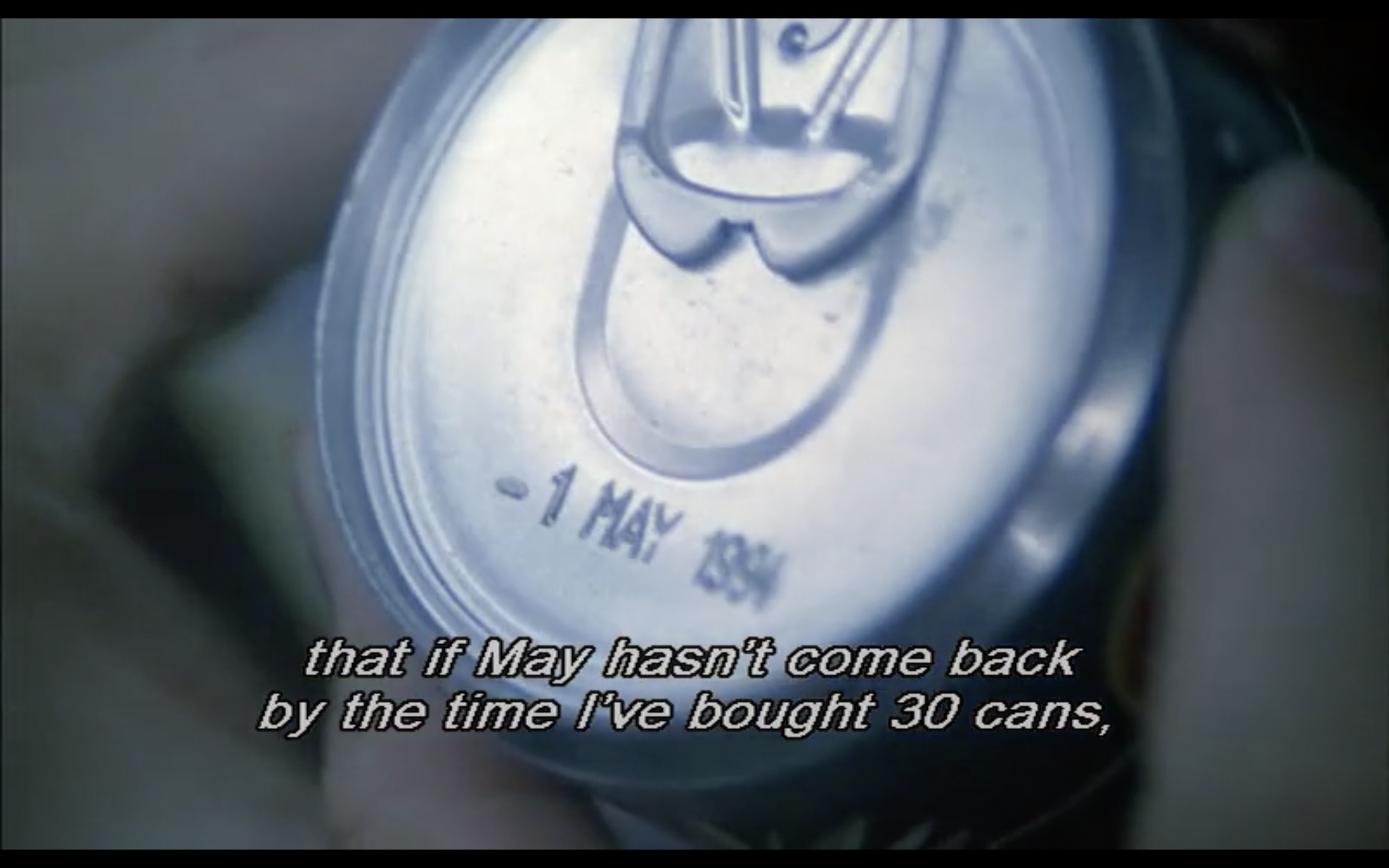
Fig. 1. Chungking Express (Wong Kar-Wai, 1994), 14:00. Close-up of the pineapple can lid; the expiry date and pull-tab ring share the same frame.
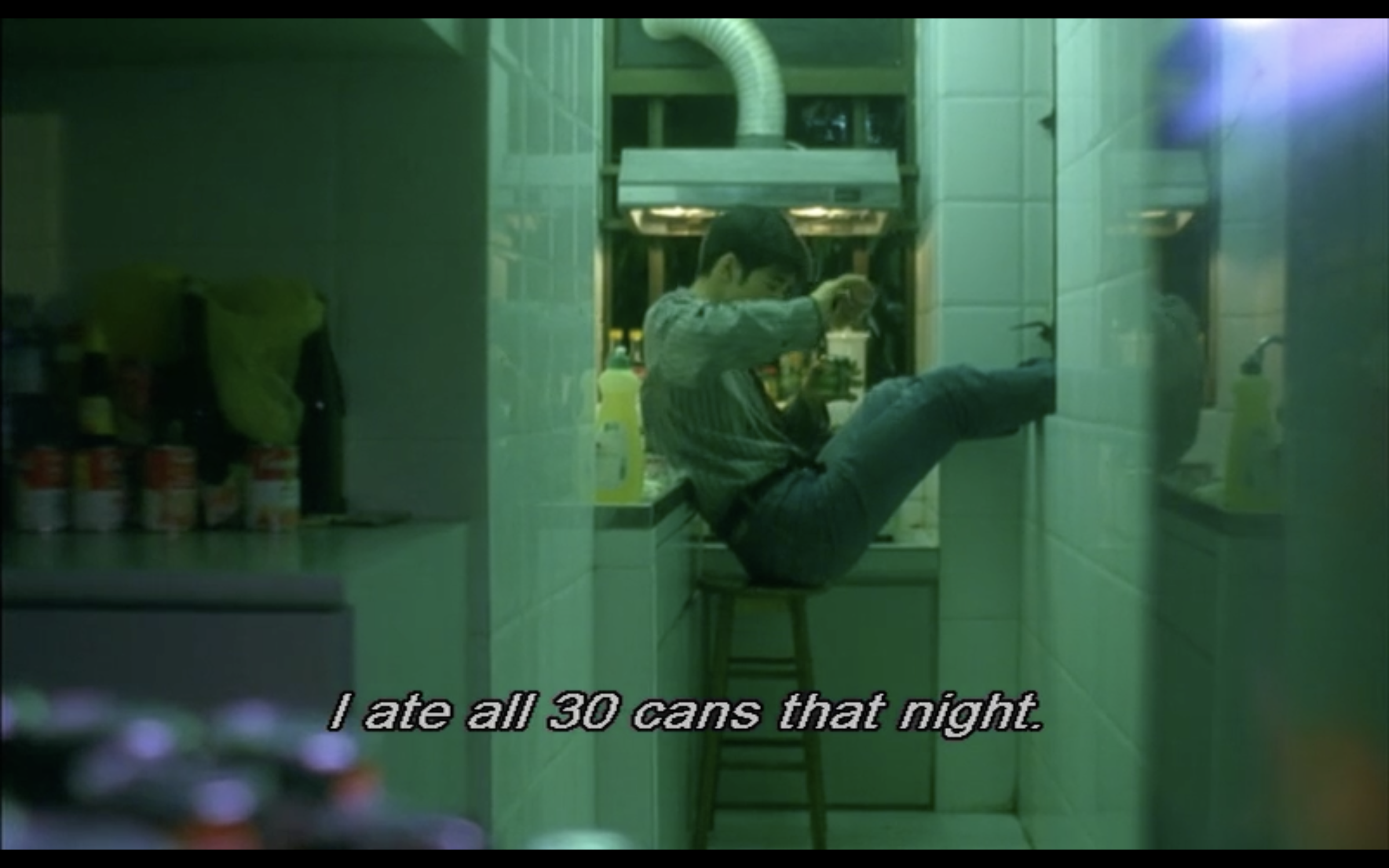
Fig. 2. Chungking Express (Wong Kar-Wai, 1994), 23:41. Cop 223 eating from a pineapple can alone in his kitchen on his birthday.
Chungking is structured as two separate stories, each centered on a different cop. The second story begins at the Midnight Express, a late-night food stand, as the boss leans over the counter to deliver a verdict to Cop 663 in Figure 3: “You never gave her a choice.” Cop 663 has been ordering the same chef’s salad every night, claiming it is for his girlfriend without asking what she might want. While the boss’ words are spoken about a salad, they land as a summary of Cop 663’s relationship failure: the food order has been a projection of assumption rather than an act of attention. This interpretation carries into the apartment sequences: Faye, a food stand worker who has fallen for Cop 663, secretly enters his flat during lunch breaks and washes his dishes. At moments, like in Figure 4, Wong shoots this sequence in close-up: Faye’s gloved hands placing washed dishes into a red dish rack, with no face in frame. Both scenes use labor around food as a substitute for feeling: the labor is named aloud at the counter, while it is carried entirely by the image of hands in the kitchen. The labor at the counter is transactional; in the kitchen, it is secret and transgressive. Faye cleans the vessels that feed Cop 663, occupying the role of domestic care without his knowledge. In Chungking, food is never innocent: it expires, diagnoses, and cleans up after feelings that were never spoken aloud.
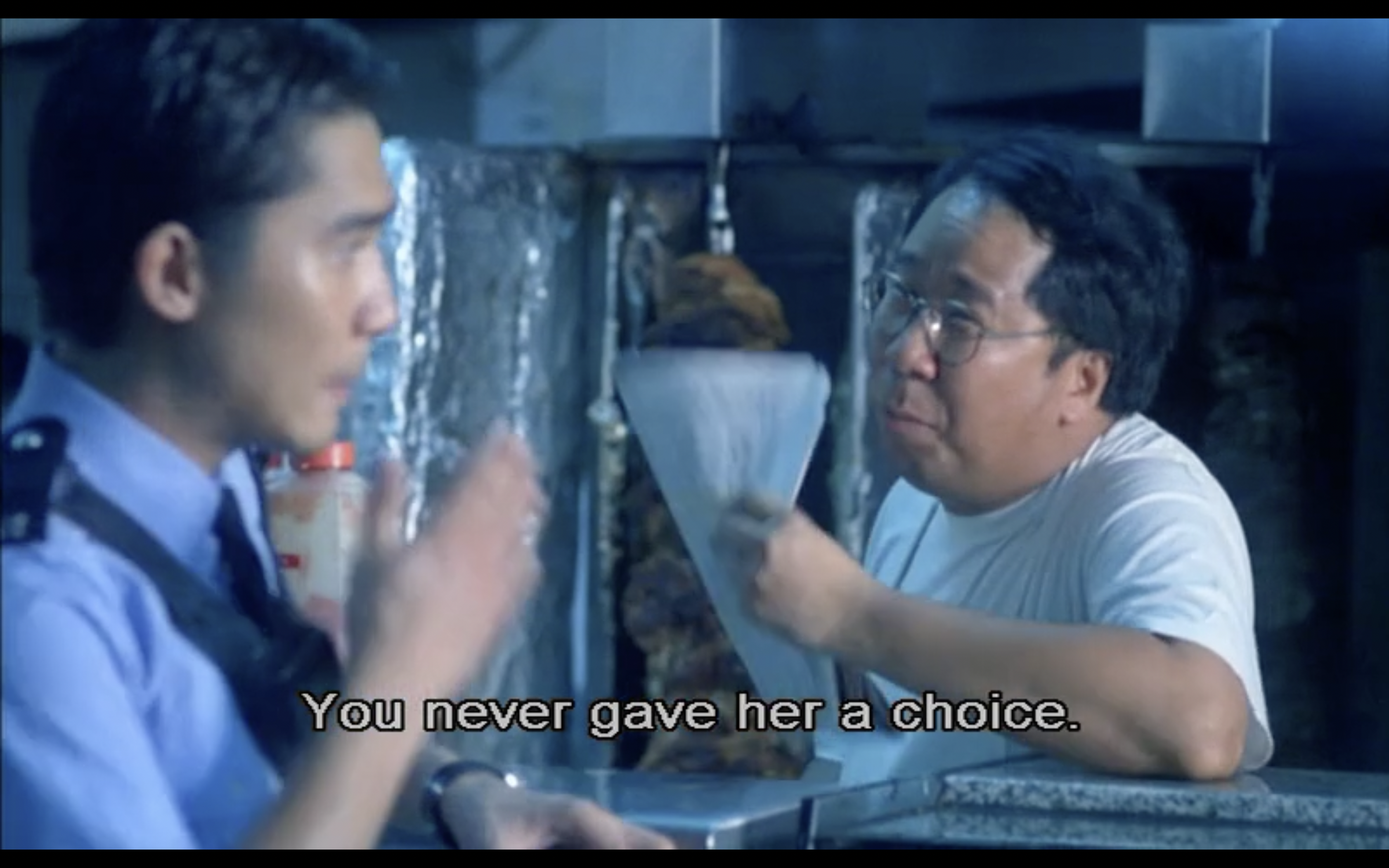
Fig. 3. Chungking Express (Wong Kar-Wai, 1994), 45:52. The food stand boss and Cop 663 conversing at the Midnight Express counter.
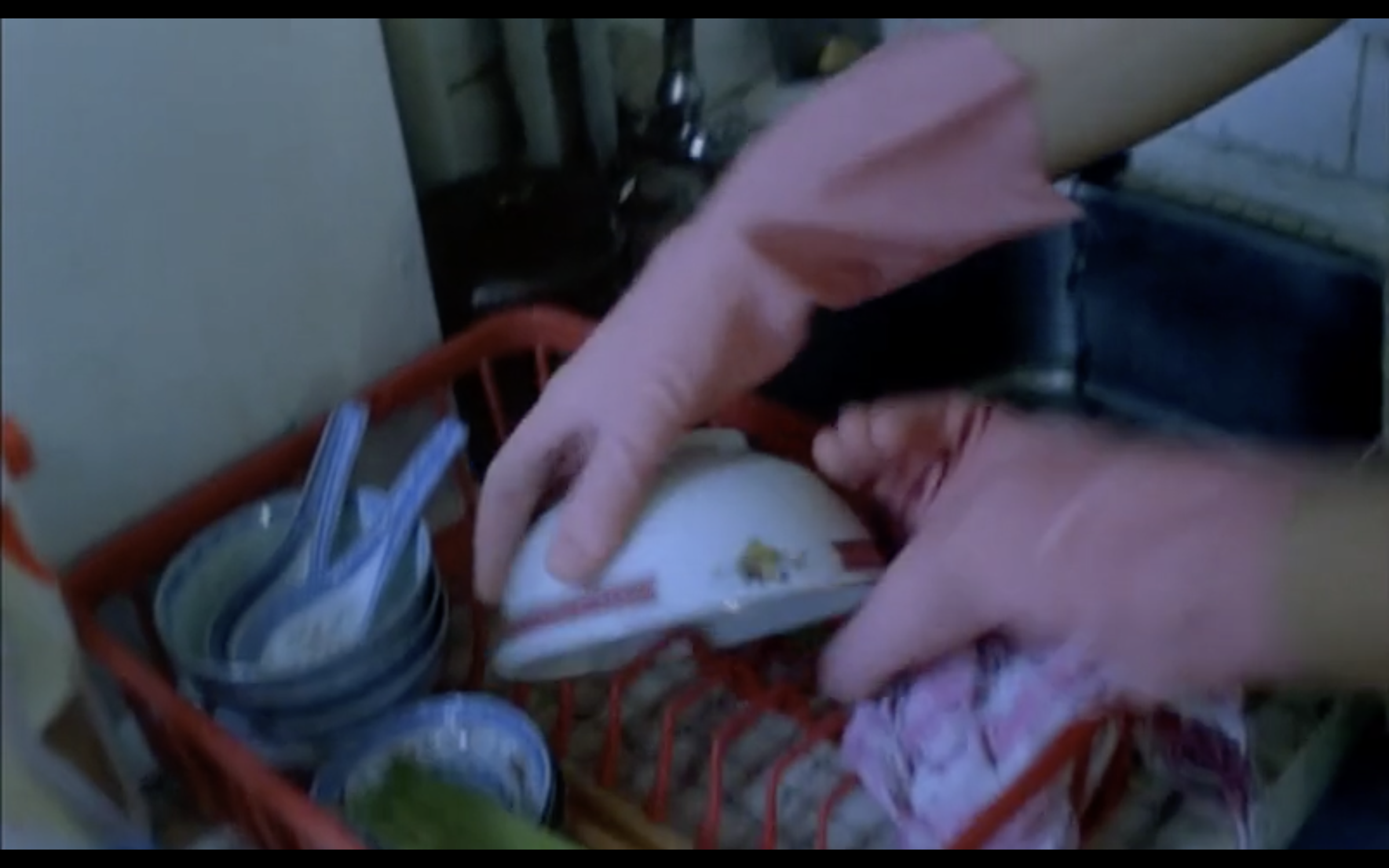
Fig. 4. Chungking Express (Wong Kar-Wai, 1994), 1:08:54. Faye's hands washing dishes in the red dish rack in Cop 663's kitchen.
Food as Withheld Offering in In the Mood for Love
While Chungking frames food through expiry, In the Mood slows it to stillness, making food the medium through which longing accumulates without resolution. In Figure 5, Mrs. Chan stands in a corridor explaining to her landlord why she is going out at night, dressed in a qipao far too elegant for the errand she names: “Just getting some noodles.” Food provides the alibi Mrs. Chan needs to exist outside the domestic space alone at night, in a building where every errand is observed (Abbas 1997). The private truth beneath this alibi surfaces later in Figure 6: Mrs. Chan, in her narrow staircase doorway with her head bowed, reveals to Mr. Chow that she does not like cooking for herself. From public alibi to private admission, both shots are defined by everything that the characters cannot say. Sound reinforces this observation: the noodle errand scenes are scored by Yumeji’s Theme, Shigeru Umebayashi’s repeating waltz that Wong uses to mark each new stage of the protagonists’ relationship, while the staircase confession plays in near silence. Wong has spoken about this structure, as the “repetitions help [the audience] to see the changes” (Li 2026). The thermos of noodles Mrs. Chan carries through the building is the fixed point around which that change accumulates; she is rarely seen consuming what she carries.
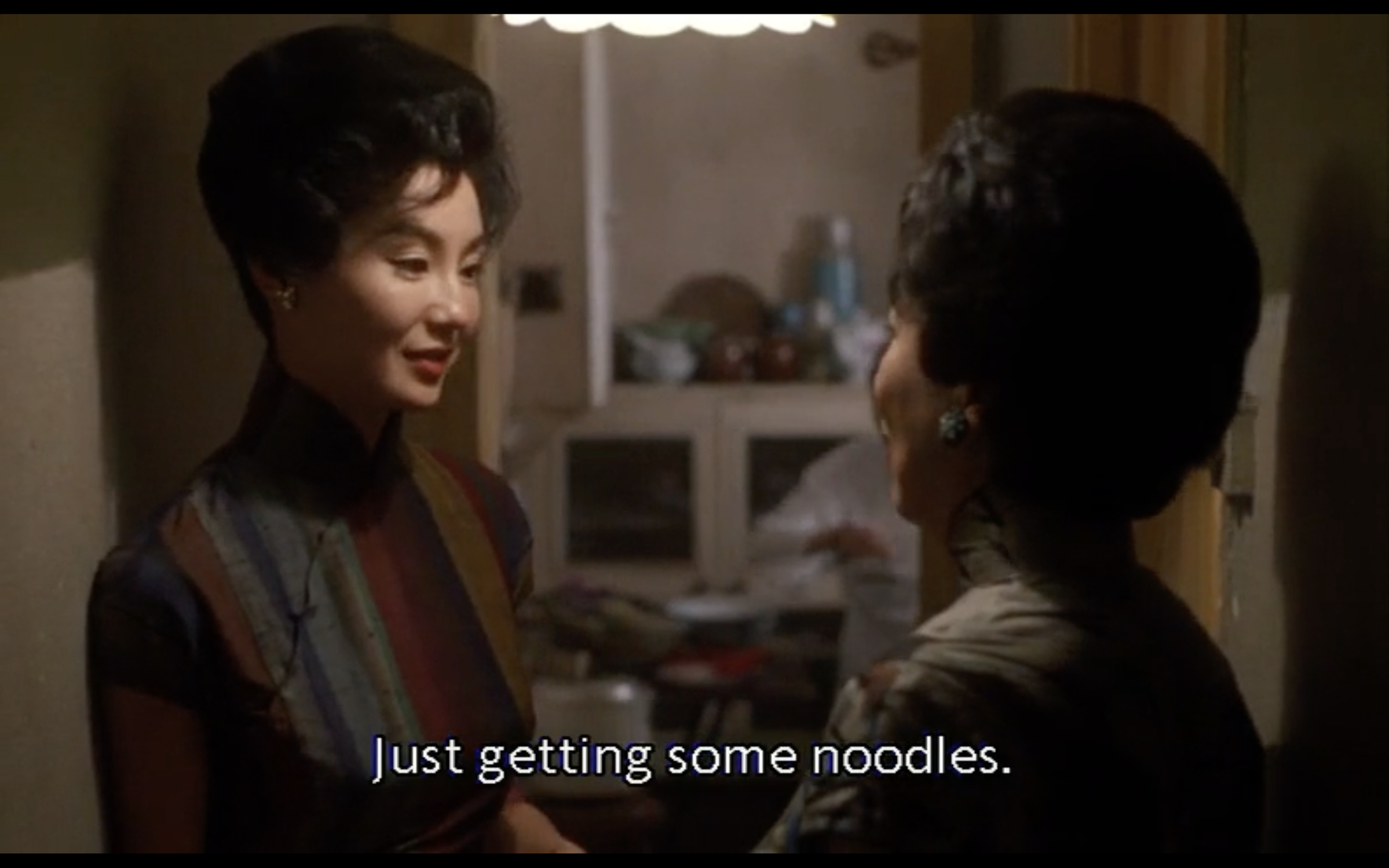
Fig. 5. In the Mood for Love (Wong Kar-Wai, 2000), 7:29. Mrs. Chan faces the landlord in the corridor doorway, dressed in a qipao.
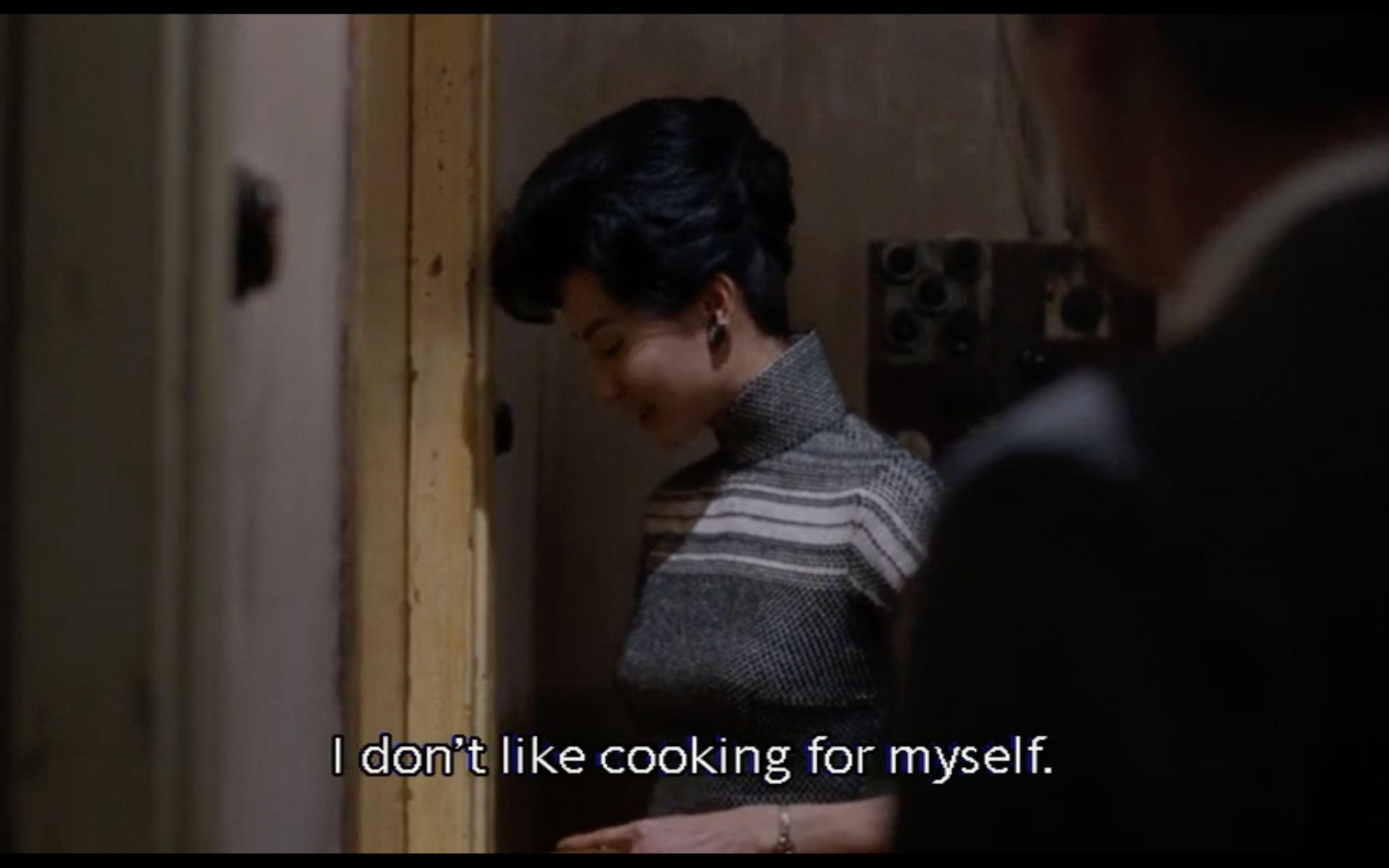
Fig. 6. In the Mood for Love (Wong Kar-Wai, 2000), 25:48. Mrs. Chan in her narrow doorway, head bowed, seen through Mr. Chow’s door frame.
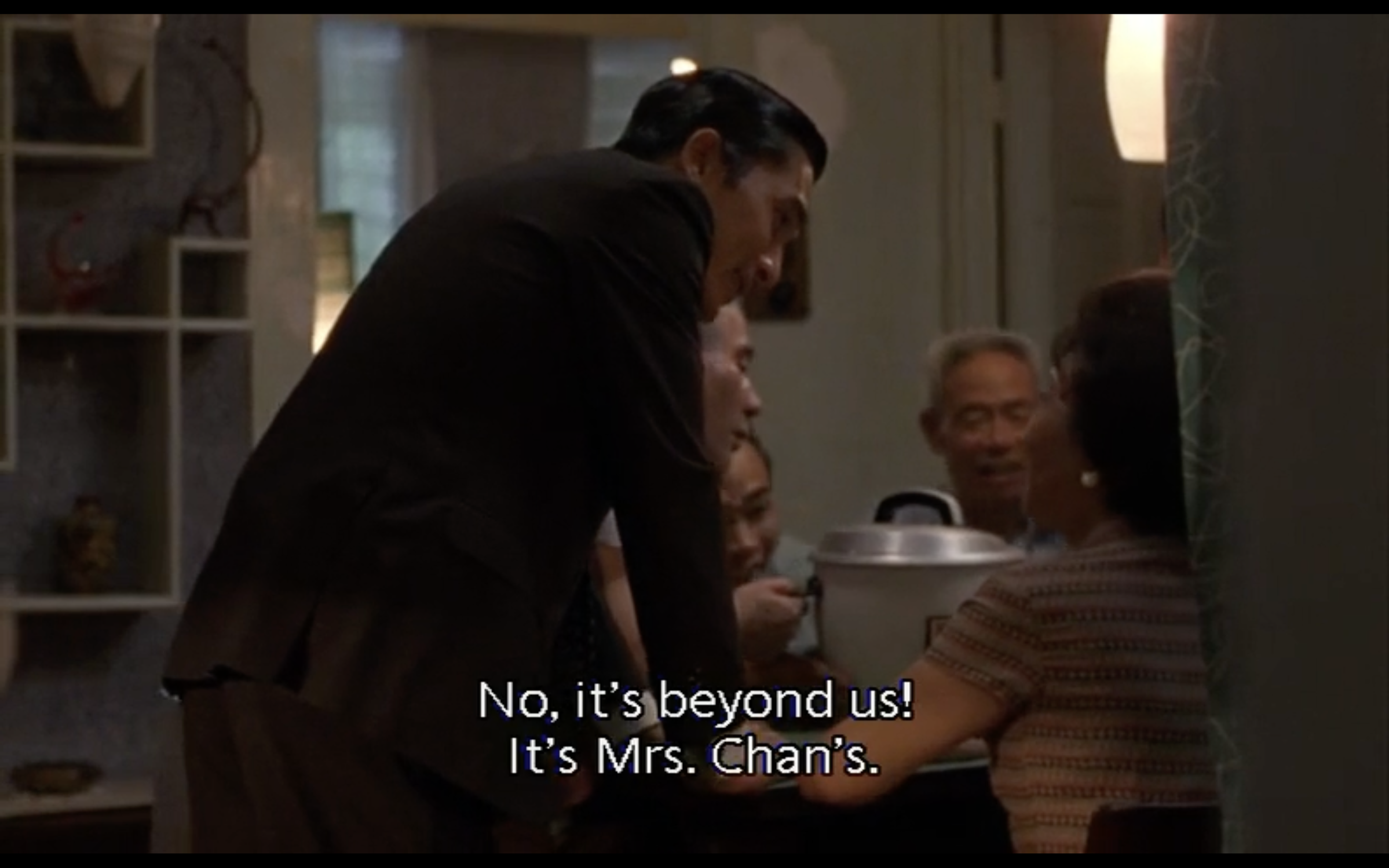
Fig. 7. In the Mood for Love (Wong Kar-Wai, 2000), 8:58. Neighbors admire Mrs. Chan's rice cooker; the scene is filmed through a doorway threshold.
Before the noodle runs establish their full emotional charge, Wong introduces a food object whose significance is invisible to the characters. Filmed through a doorway with the frame cutting into both edges of the image, neighbors gather admiringly around Mrs. Chan’s Japanese rice cooker in Figure 7. Mrs. Chan is absent from the frame; the appliance was brought back from Japan by her husband on a business trip on which the affair with Mrs. Chow was taking place. Betrayal contaminates the rice cooker before it cooks a single grain of rice, but Wong does not underline the irony; he simply films the neighbors through a doorway, using the threshold framing that recurs across the film’s most charged food moments. In each case, the domestic object carries what the characters cannot say; the rice cooker is the first instance where neither character yet knows what they are carrying.
The sesame syrup scene is the film’s most precise act of disguised care. Mr. Chow has had a fever, and Mrs. Chan privately makes a pot of sesame syrup as a remedy. When her landlord probes for a reason, Mrs. Chan claims she had a sudden craving for sesame syrup. Wong films this scene through a doorway, with Mrs. Chan positioned half out of frame at the door’s edge. When Mr. Chow later thanks her, Mrs. Chan deflects that “there is no need, [as she] was making [the syrup] anyway.” The food carries the feeling that the words refuse to convey. The restaurant scene prior in Figure 9 is the first time an offering of food is accepted directly. In a western-style steakhouse, Mrs. Chan and Mr. Chow sit opposite each other in a perfectly symmetrical two-shot: both in profile, looking at their plates, with the table’s green surface reflecting the strip lighting between them. Both characters order food for each other as their absent spouses would, using food as a medium for impersonation. The emotional climax arrives without dialogue: Mr. Chow reaches across the table and puts a small spoonful of mustard on the edge of Mrs. Chan’s plate as she dips her steak into it, accepting the offering. Against the withheld and disguised offerings that precede this moment, the mustard is the film’s most direct food gesture and its most intimate (Brunette 2005).
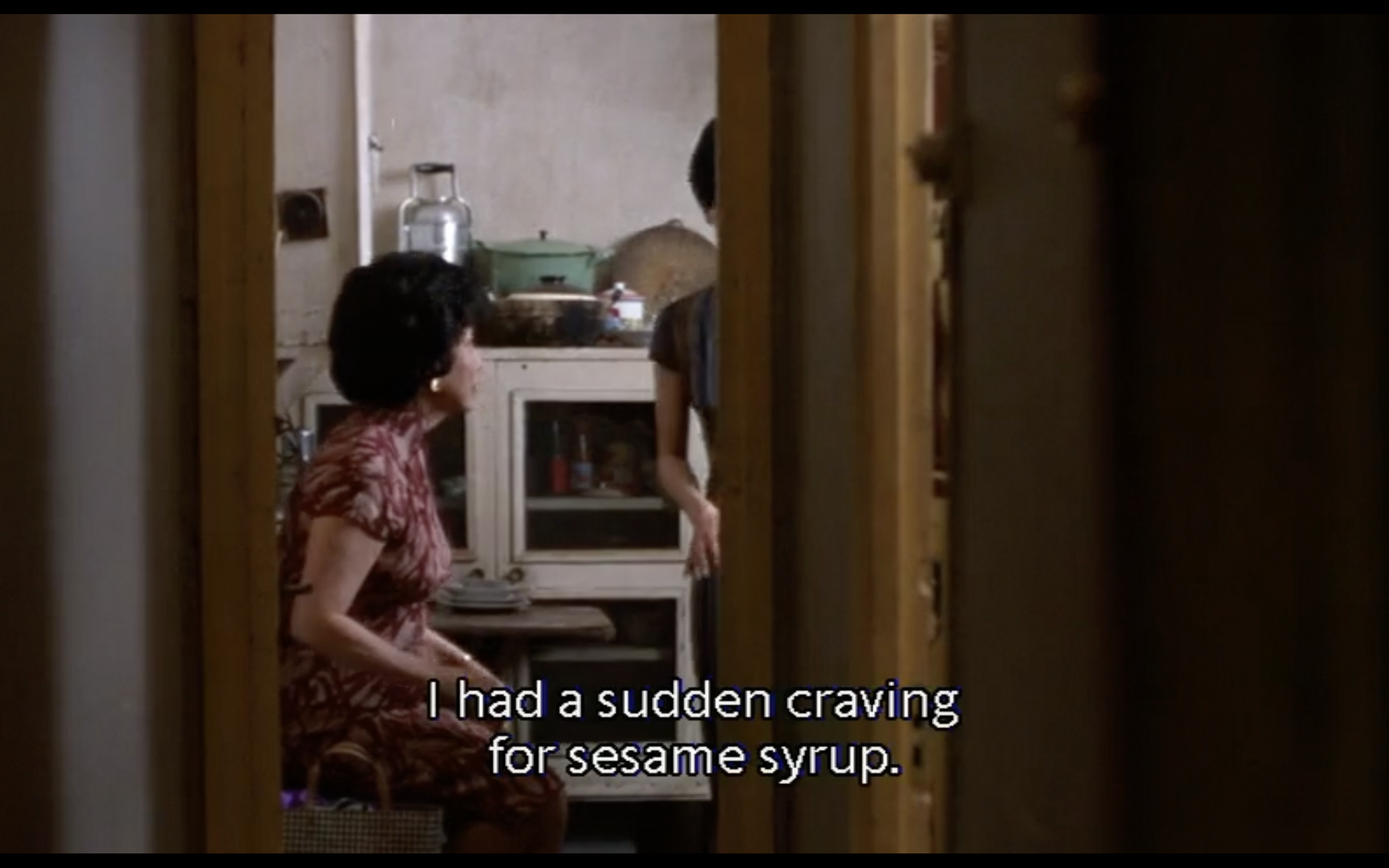
Fig. 8. In the Mood for Love (Wong Kar-Wai, 2000), 39:22. Mrs. Chan, half out of frame from the doorway, and her landlord in the kitchen.
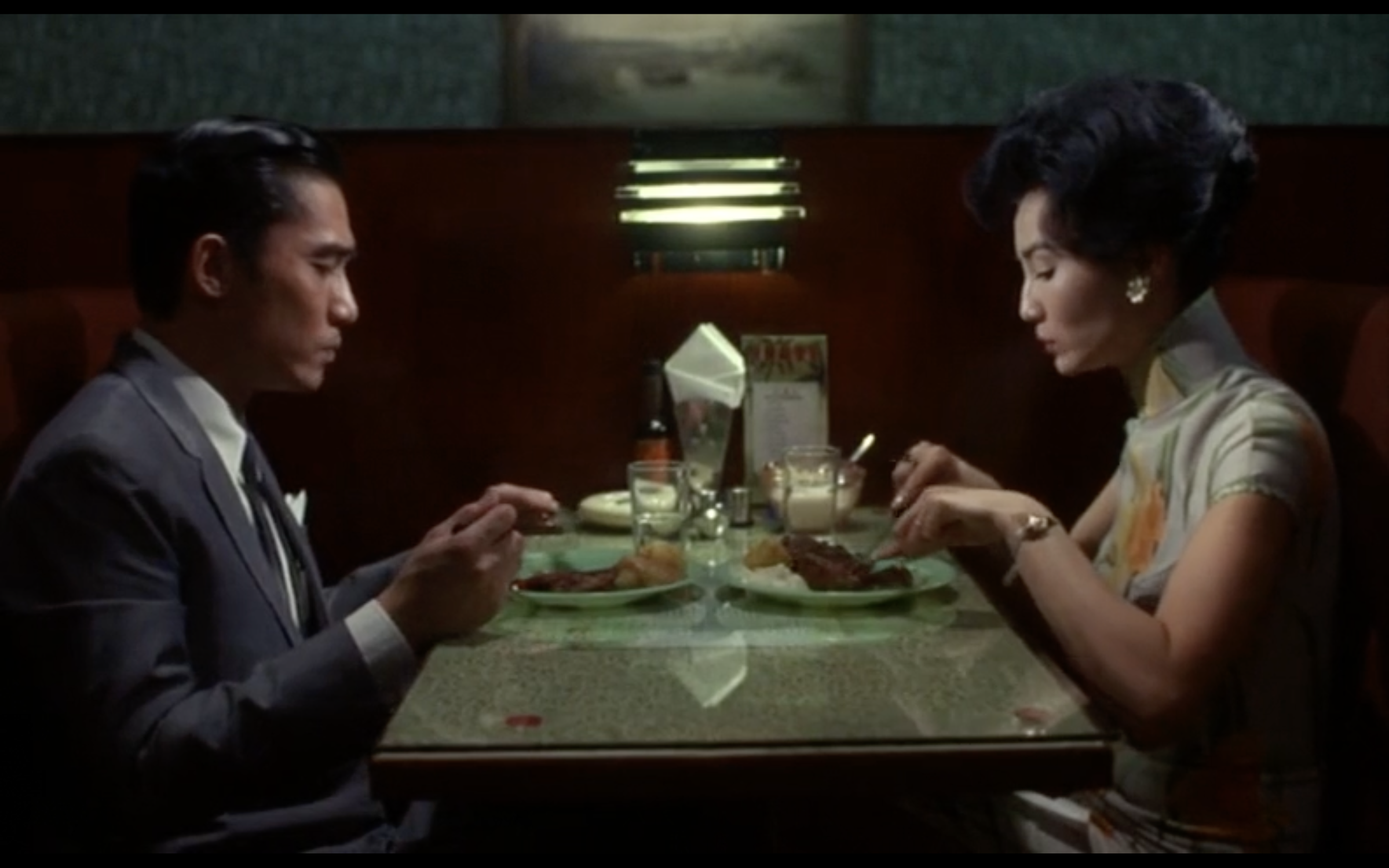
Fig. 9. In the Mood for Love (Wong Kar-Wai, 2000), 33:25. Mrs. Chan and Mr. Chow eating together at the steakhouse in symmetrical fashion.
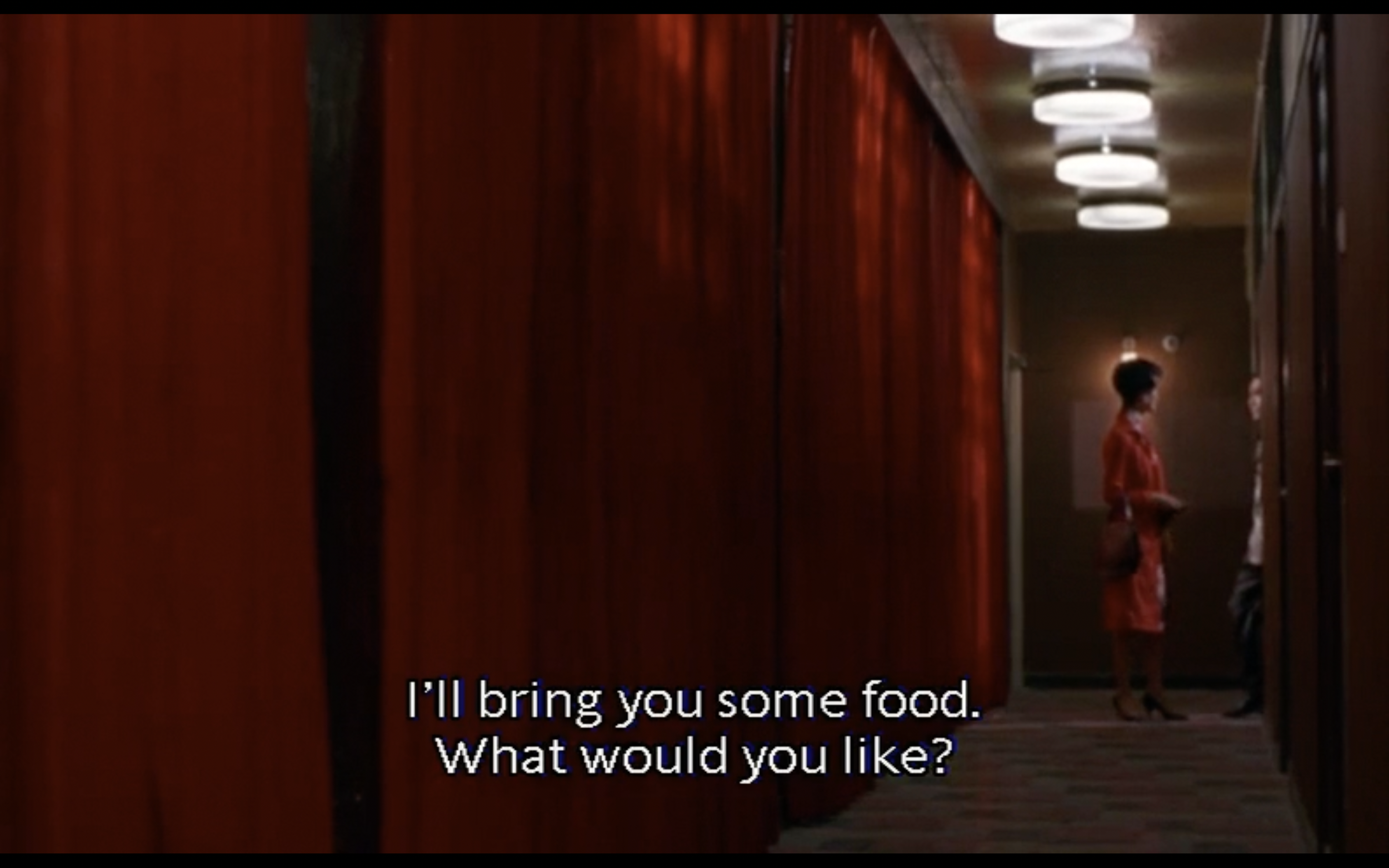
Fig. 10. In the Mood for Love (Wong Kar-Wai, 2000), 54:27. Mrs. Chan exiting Mr. Chow’s room at the end of the red hotel corridor.
The ensuing corridor scene in Figure 10 suspends the logic of the mustard moment entirely. Wong films Mrs. Chan from the far end of a long hotel corridor: her figure, cloaked in a red trench coat, is tiny in the right third of the frame, while the left two-thirds are dominated by a vast red wall that absorbs her almost completely. Mr. Chow is barely visible in his doorway on the far right. Following a work session together, Mrs. Chan offers to bring some food during her next visit. The food does not exist yet; Mrs. Chan offers something before it has been made, across social forces that deem the delivery improper. Against the mustard moment, completed in silence across a small table, this gesture is suspended in language; the corridor renders the distance between them absolute, as the two characters are aware that they can never be together. In In the Mood, food is never consumed freely: it is covered by alibis, disguised as coincidence, or accepted in a single fleeting gesture, making withholding the formal grammar of longing.
Placed against Chungking’s register of expiry, this pattern of withholding reveals something the two films can only show in relation to each other: the distinction between the two films is not theme but temperature. While Chungking portrays a close-up of an expiry date stamped in metal, In the Mood portrays a figure made tiny by framing, offering food that does not yet exist. Chungking manipulates time technologically, using step-printing to make the expiry date the fixed focus in a city full of motion; In the Mood manipulates proximity spatially, using long takes and architecture to enforce a slowness its characters cannot permit themselves. Where Chungking’s food is consumed, In the Mood’s is withheld, deferred, or promised. This contrast is not due to differences in historical context between 1994 consumer modernity and 1962 social conservatism; rather, both films respond to the déjà disparu: the pre-handover condition in which everything is already disappearing even as it is lived (Abbas 1997). Chungking responds with dark comedy, stamping an expiry date on desire and eating all thirty cans that night; In the Mood responds with lament, making a pot of sesame syrup for someone who cannot be named and offering food that may never arrive. While Chungking encodes longing as something that expires on a deadline, In the Mood encodes it as something indefinitely deferred; the two films do not complement each other but diverge irreconcilably, and food is the formal object through which that divergence is made legible.
Conclusion
By making food the primary vehicle for unexpressed desire in both Chungking Express and In the Mood for Love, Wong Kar-Wai encodes two distinctive responses to Hong Kong’s culture of disappearance; while Chungking treats food as a consumable defined by its expiry, In the Mood transforms it into an offering withheld, revealing that the two films are not variations of the same longing but its two irreconcilable registers. In each case, food and the interactions surrounding it carry the film’s implicit meaning precisely because food is uniquely suited to bear it. Wong wanted to make a story about rice cookers and noodles but instead created two films that prove food is the only medium that cannot lie: unlike dialogue, it cannot be deflected, and unlike gesture, it must eventually be consumed or abandoned, forcing a resolution that feelings are never granted. In doing so, Wong reveals that the most intimate feelings in a disappearing city are not lost for a lack of words, but for a lack of someone willing to receive what is offered.
Works Cited
Abbas, Ackbar. Hong Kong: Culture and the Politics of Disappearance. Minneapolis: University of Minnesota Press, 1997.
Brunette, Peter. Wong Kar-Wai. Urbana: University of Illinois Press, 2005.
Wong Kar-Wai, dir. Chungking Express. Hong Kong: Jet Tone Films, 1994.
Wong Kar-Wai, dir. In the Mood for Love. Hong Kong: Block 2 Pictures / Jet Tone, 2000.
Li, Jie. "Week 7: Hong Kong Auteur: Wong Kar-Wai." Lecture, Harvard University, Cambridge, MA, March 11, 2026.